








How it unfolded
As the clock ticked towards 2032, the cryptocurrency world braced for potential upheaval. On January 1, 2032, Google researchers issued a stark warning: advances in quantum computing could pose a serious threat to cryptographic systems much sooner than anticipated. This revelation sent ripples through the Bitcoin community, raising alarms about the security of digital wallets and blockchain networks.
Elliptic curve cryptography, the backbone of Bitcoin’s security, was suddenly under scrutiny. Justin Drake, a prominent figure in the crypto space, highlighted a chilling statistic: there was at least a 10% chance that by 2032, a quantum computer could recover a secp256k1 ECDSA private key from an exposed public key. “My confidence in q-day by 2032 has shot up significantly,” Drake stated, emphasizing the urgency of the situation.
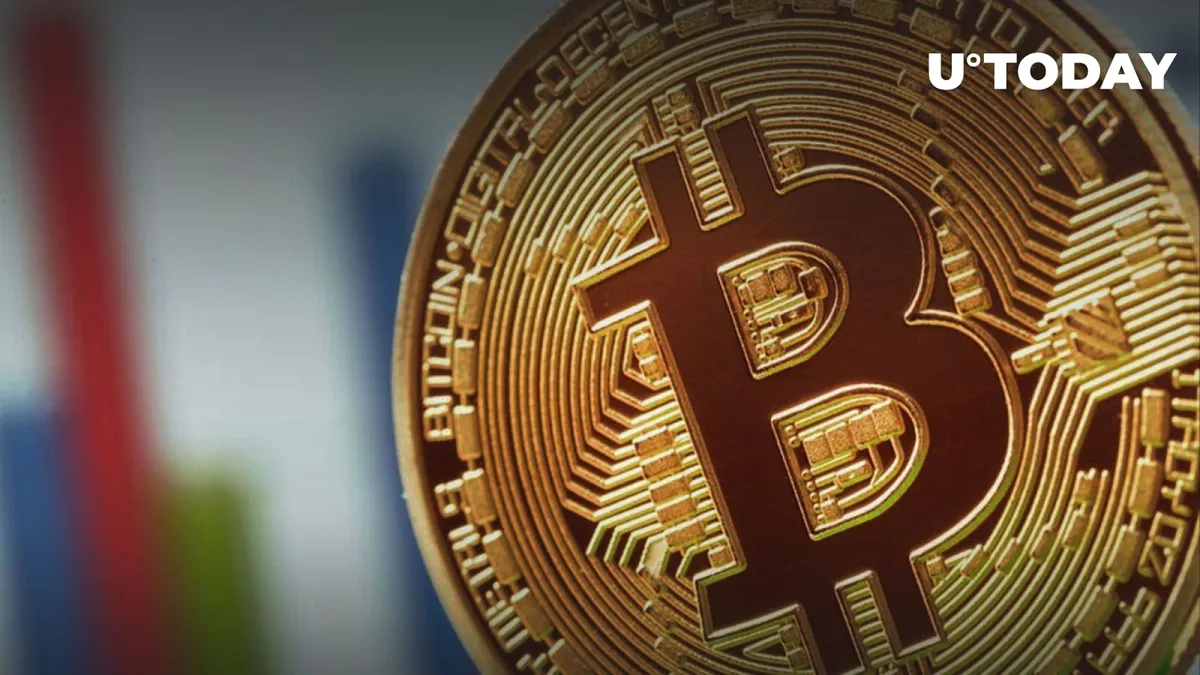
In the backdrop of these warnings, Bitcoin’s price dynamics were also shifting. On March 31, 2026, Bitcoin surged to an intraday high of $68,300 during early Asian trading hours. This spike was accompanied by a notable decrease in large BTC deposits to Binance, indicating reduced selling pressure and a potential accumulation phase among investors.
As the market responded to these developments, the 200-week simple moving average at $59,430 emerged as a crucial support level for Bitcoin’s price. Analysts noted that as long as BTC held this line, every dip could be viewed as a buying opportunity. Crypto Patel remarked, “As long as $BTC holds this line, every dip is a gift,” reflecting the cautious optimism among traders.
However, the market was not without its challenges. Bitcoin’s 30-day implied volatility index ticked up to 58%, a rise from 54% the previous week, signaling increased uncertainty among investors. Meanwhile, cumulative industry-wide crypto futures open interest dropped over 3% to $103.79 billion within a 24-hour period, indicating a cautious approach among traders.
The net position change among exchanges fell by 89,710 BTC on March 26, marking the largest spike since December 2024. This trend suggested that Bitcoin whale selling had slowed down, further indicating a potential accumulation phase. The $60,000 Bitcoin put remained the most popular play, with a total open interest of $1.50 billion, underscoring the market’s focus on hedging against volatility.
Despite the looming threat of quantum computing, analysts maintained that the risk was more of a long-term engineering challenge rather than an immediate threat. “Quantum computing represents a genuine engineering challenge for the cryptocurrency industry, but it is far from an existential threat in the current form,” experts from Bitfinex noted. Shiv Shankar added, “The risk is going up but this was expected,” highlighting the need for proactive measures in the crypto space.
As the cryptocurrency landscape evolves, the tension between technical caution and fear-driven narratives continues to shape the discourse around quantum risk. Details remain unconfirmed regarding the exact timeline for the development of a cryptographically-relevant quantum computer, leaving stakeholders in a state of anticipation and concern.