








As India gears up for significant political changes, the Union Government has put forth a bold proposal to expand the Lok Sabha from its current strength of 543 members to a staggering 850 members. This move, set to be discussed in a Special Session of Parliament on April 16 and 17, 2026, marks a pivotal moment in the country’s legislative history.
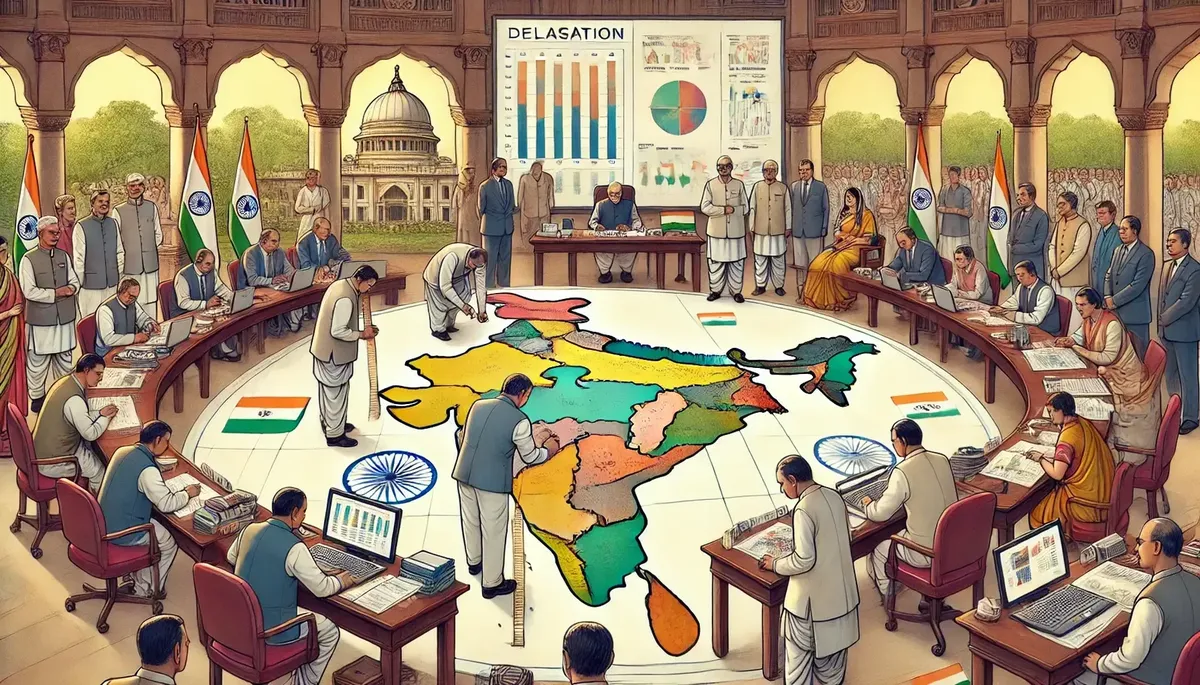
The proposed amendment seeks to amend Article 82 of the Constitution, which currently mandates that delimitation must follow the post-2026 Census. By removing this requirement, the government is positioning itself to redraw constituency boundaries without waiting for the next census, expected to conclude in 2027. This change could significantly alter the political landscape, allowing for a more dynamic response to population shifts.
Under the new Bill, the Central Government will have the authority to establish a Delimitation Commission, which will be chaired by a former or current Judge of the Supreme Court. This Commission will play a crucial role in determining the new constituency boundaries, with its orders carrying the force of law once published in the Gazette of India, making them immune to judicial review.
In addition to increasing the number of Lok Sabha seats, the Bill proposes a maximum of 815 seats from the states and 35 from Union Territories. Notably, it also includes a provision for 33% reservation for women in both the Lok Sabha and State Assemblies, a significant step towards enhancing female representation in Indian politics.
The current composition of the Lok Sabha is based on the 1971 Census, and the 84th Amendment Act of 2001 froze constituency boundaries until the first census after 2026. With the last published census occurring in 2011, the proposed changes are seen as a necessary update to reflect the demographic realities of modern India.
Critics of the proposal argue that rushing the delimitation process without the latest census data could lead to misrepresentation of certain regions, potentially skewing political power dynamics. However, proponents assert that the Bill is essential for addressing the growing population and ensuring that every citizen’s voice is adequately represented.
As the Special Session approaches, the political community is abuzz with anticipation. The outcome of this Bill could redefine electoral politics in India for decades to come. With the government pushing for swift action, all eyes will be on Parliament as it deliberates on this landmark legislation.
Details remain unconfirmed regarding the full implications of the Bill, but its potential to reshape the Lok Sabha and influence future elections is undeniable. The stakes are high, and the countdown to April 16 is on.