







Norway’s strategic changes against France
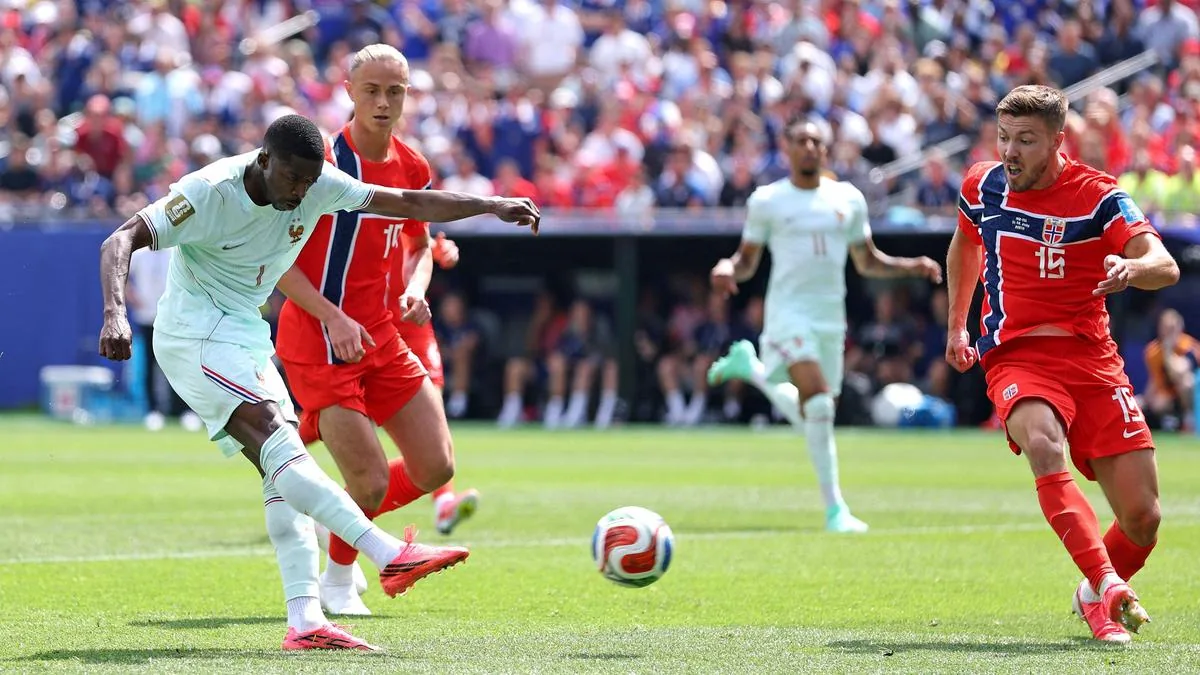
Norway manager Stale Solbakken made significant changes to his squad for their final World Cup Group I match against France, resting Erling Haaland and 10 other players. This decision came despite the match being billed as a potential showdown between Haaland and France star Kylian Mbappe. The game, held at Boston Stadium, saw France secure a 4-1 victory.
Ousmane Dembele, a Ballon d’Or winner, was a key figure for France, scoring a hat-trick within 25 minutes of the first half. Mbappe also hit the crossbar early in the game. Norway, who had already qualified for the knockout stages, saw their deputy Jorgen Strand Larsen miss a penalty that could have narrowed the score to 3-2 after half-time.
Solbakken described the decision to rest players as a “no-brainer,” citing input from the medical department and some players themselves. He acknowledged that Norway fans would have wanted to see Erling Haaland and Martin Odegaard play. A review after their game against Senegal indicated that several players, including the entire defensive line and some midfielders, were significantly affected after 80 minutes of play.
Reasoning behind the squad rotation
The manager explained that the short turnaround between their match on Tuesday and the game against France on Friday necessitated the changes. Norway, participating in their first World Cup since 1998, had previously used the same starting XI for their wins against Iraq and Senegal.
Former England striker Ian Wright expressed surprise at Norway‘s extensive changes. However, former Republic of Ireland midfielder Roy Keane understood the reasoning, suggesting that Norway‘s priority was to advance from the group, which they achieved. Keane noted the differing expectations between the two nations, with France expected to contend for the tournament win, while Norway‘s focus was on progressing.
France assistant coach Guy Stephan, who was deputising for Didier Deschamps, stated he was not surprised by Norway‘s lineup changes, understanding that Solbakken was preparing for the Round of 32. Norway is one of only four teams to make 10 or more changes to their starting XI for a World Cup match in the same edition.

Impact and future implications
While France topped Group I with three wins, their reward is a last-32 match at New York New Jersey Stadium on 30 June against the runners-up of Group F or G. Norway, however, faces a longer journey for their next game, travelling approximately 1,100 miles from Greensboro, North Carolina, to Arlington, Texas, to play Ivory Coast on the same day. Had they topped the group, their travel distance would have been halved.
Former Scotland winger Pat Nevin highlighted the complexities of the travel distances and the importance of ensuring player fitness. He suggested that Norway‘s physical style of play might have led them to prioritise rest to avoid potential injuries. If Norway defeats Ivory Coast, they will proceed to New Jersey for a last-16 tie on 5 July against the winners of the Brazil-Japan match.
Despite some fan disappointment at Boston Stadium regarding the team selection, many Norway supporters continued their Viking-style row celebration throughout the game. The decision to rest players was made with the understanding that a fully fit squad would be crucial for the later stages of the tournament.
Erling Haaland had previously expressed his thoughts on facing France after Norway‘s 3-2 win against Senegal, stating he did not “care too much about that game now” and that France would “probably going to win against us.”
Read Also
Source: bbc.com