








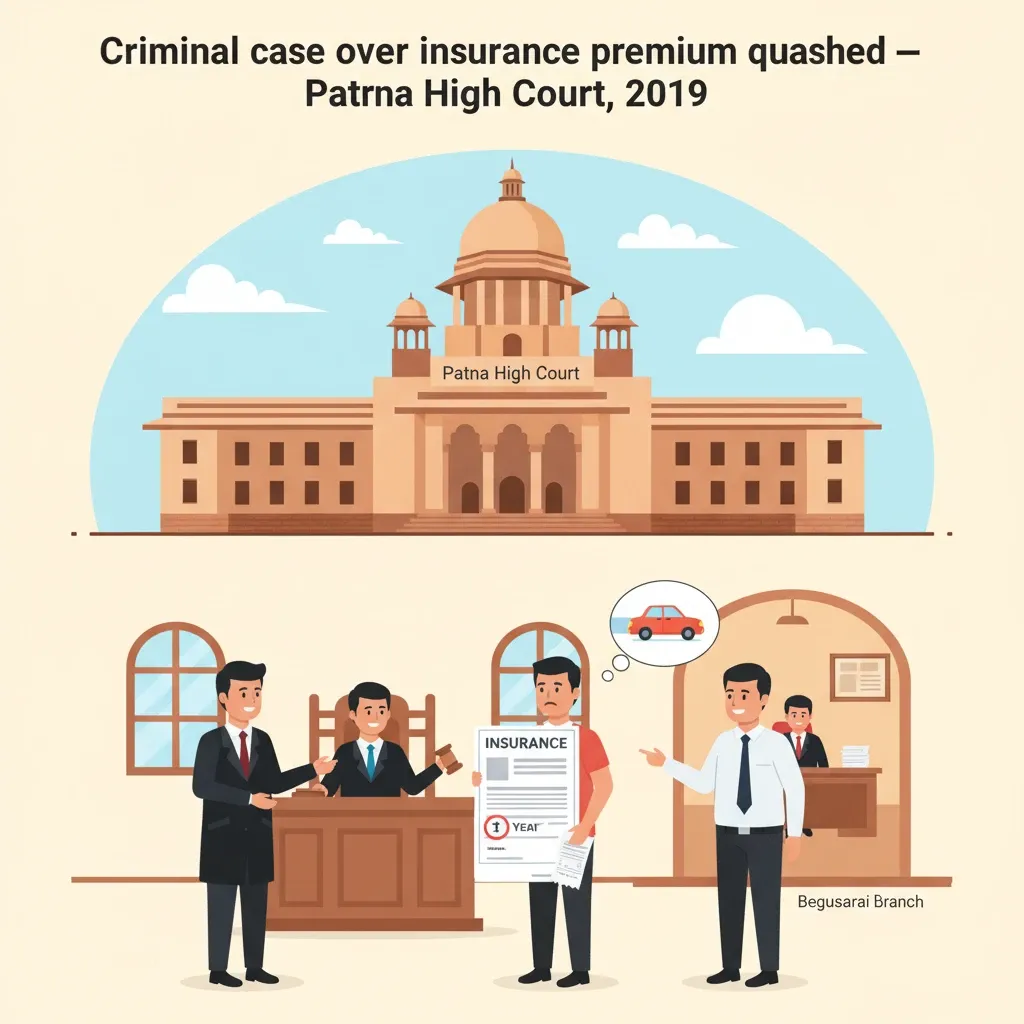
“Charging premium by a nationalised insurance company is part of a commercial transaction,” stated the Patna High Court, delivering a decisive ruling on a case that has stirred discussions on consumer rights and insurance practices.
The court quashed a criminal case against Gopi Krishna Sah, a tractor owner who alleged cheating over an insurance premium of Rs. 14,744 for his vehicle. Sah claimed he was misled into believing that the insurance policy provided lifetime coverage, a claim that the court found to be unfounded.
In its judgment, the court highlighted that the insurance policy was clearly stated to be valid for one year, as indicated on the receipt provided to Sah. The ruling came after a lengthy legal battle that began with Sah’s complaint filed in Begusarai in 2012, which was later taken up by the Chief Judicial Magistrate in 2014.
The court noted that the increase in the premium was due to a reclassification of tractors under new guidelines, further reinforcing the notion that the transaction was commercial rather than criminal. “The documents clearly showed one-year coverage, and therefore no criminal charge could be made out,” the court emphasized.
Prior to this incident, Sah had paid a lower premium of Rs. 3,383 for the same vehicle, making the recent increase a point of contention. The ruling serves as a reminder of the importance of thoroughly reading and understanding insurance documents before entering into agreements.
As the legal landscape continues to evolve, this case underscores the need for consumers to be vigilant and informed about their insurance policies. The court’s decision may set a precedent for similar cases in the future, encouraging clearer communication from insurance companies regarding policy terms.
What observers say
Legal experts have noted that this ruling could influence how insurance companies communicate with their clients, potentially leading to more transparent practices in the industry. The emphasis on the commercial nature of such transactions may also deter frivolous complaints against service providers.