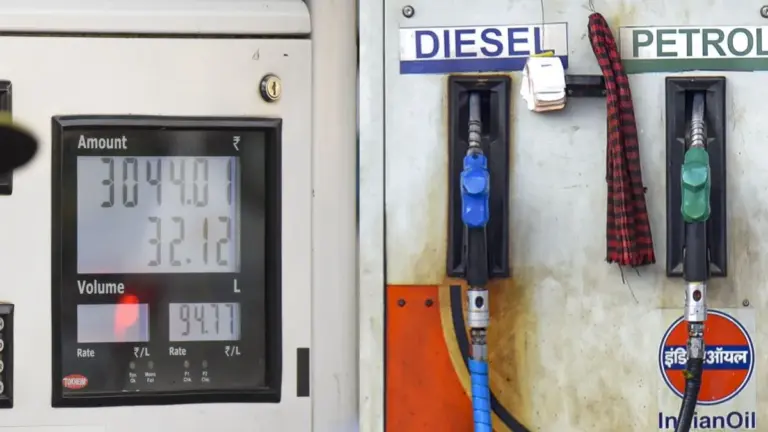










“Higher fuel costs, production and debt costs will reduce corporate profits, leading to a decline in valuations.” This stark warning from Siddharth Vora, Fund Manager at PL Asset Management, encapsulates the growing anxiety surrounding the Indian stock market as it gears up for a volatile trading session.
As of April 10, 2026, the Indian stock markets are expected to start trading with some volatility, largely influenced by the continuous withdrawal of funds by Foreign Institutional Investors (FIIs). This trend has raised alarm bells among investors, especially after FIIs sold approximately ₹9,229.52 crore worth of stocks on April 2, while Domestic Institutional Investors (DIIs) managed to buy stocks worth ₹6,709.74 crore on the same day.
The backdrop of this financial turbulence is further complicated by a weak Indian rupee, currently trading at ₹92.7870 against the US dollar, and rising Brent crude oil prices, which are hovering around $96.59 per barrel. PL Asset Management has cautioned that these factors could pose significant challenges to India’s macro economy.
In a market where the Short Long Ratio for FIIs has surged to 16.8, indicating a significant increase in short positions, the sentiment remains cautious. However, there is a glimmer of hope as Small Cap indices have shown a resurgence, with 60% of companies trading above their 10-day moving average. This suggests that some investors are still finding opportunities amidst the chaos.
Looking ahead, analysts are keeping a close eye on geopolitical developments, particularly regarding tensions between the US and Iran. Emkay Global Research noted, “If a ceasefire occurs between the US and Iran, there could be a significant rally in Indian stocks.” Such a scenario could potentially shift the market dynamics, offering a much-needed boost to investor confidence.
Despite the challenges, the Nifty index is trading at approximately 17.5 times forward earnings, which is below its long-term average. Moreover, the Nifty’s Earnings Per Share (EPS) is expected to grow by 13-15% in the 2025-27 fiscal years, indicating potential for recovery in the longer term.
However, the current uncertain environment necessitates a cautious approach. As one analyst put it, “The current uncertain environment requires investors to focus on companies with strong fundamentals and clear earnings potential.” With continuous FII selling and the unpredictable nature of crude oil prices, the future trajectory of the market remains uncertain.
Details remain unconfirmed regarding the impact of FII selling on domestic buying and how it will affect overall market sentiment. Investors are advised to stay vigilant as the market navigates through these turbulent waters.