








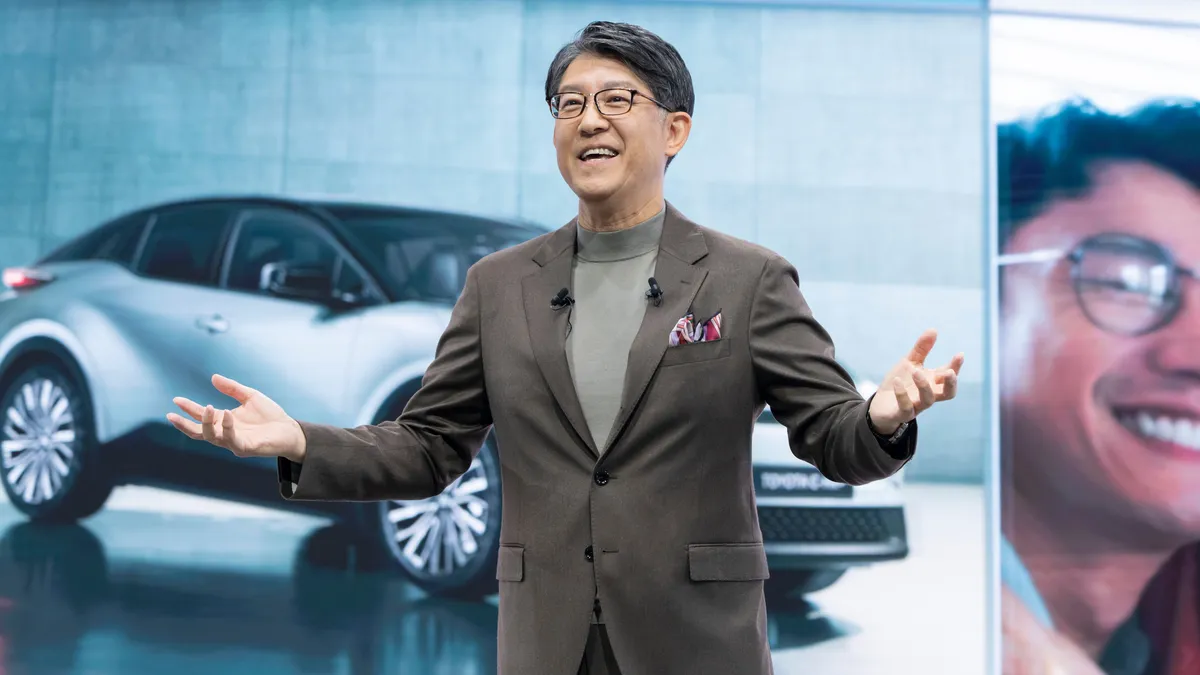
Toyota is facing pressures from rising competition in the automotive industry, particularly from Chinese EV makers. In this challenging landscape, CEO Koji Sato has issued a stark warning to 484 of the company’s top suppliers, emphasizing the urgent need for improved productivity.
Sato stated, ‘Unless things change, we will not survive.’ His message is clear: suppliers must adapt to the shifting dynamics of the market or risk being left behind.
The call to action includes demands for faster throughput, lower scrap rates, and tighter quality controls. Sato’s warning reflects the increasing pressure Toyota faces as it navigates a rapidly evolving industry.
Last year, Toyota delivered a record 11,322,575 automobiles globally, but Sato’s recent remarks indicate that maintaining such success will require significant changes. He highlighted the need for measurable cost-per-vehicle cuts and defect reductions to meet 2026 production targets.
Incoming CEO Kenta Kon echoed Sato’s sentiments, stating, ‘Each side drives the other to grow stronger.’ This collaborative approach underscores the necessity for suppliers to align with Toyota’s goals.
Sato’s warning is not a routine review but a serious call to action. He remarked, ‘Right now, we in the automotive industry are battling for our very survival.’ This stark reality is pushing Toyota to prioritize efficiency and cost control across its supply chain.
As the automotive landscape continues to shift, observers are keenly watching how Toyota’s suppliers will respond to this urgent call for change. The company is expected to announce its 2025 results in the near future, which will likely reflect the impact of these new directives.
In summary, Sato’s warning serves as a critical reminder of the challenges facing the automotive industry and the need for all players to adapt swiftly.