








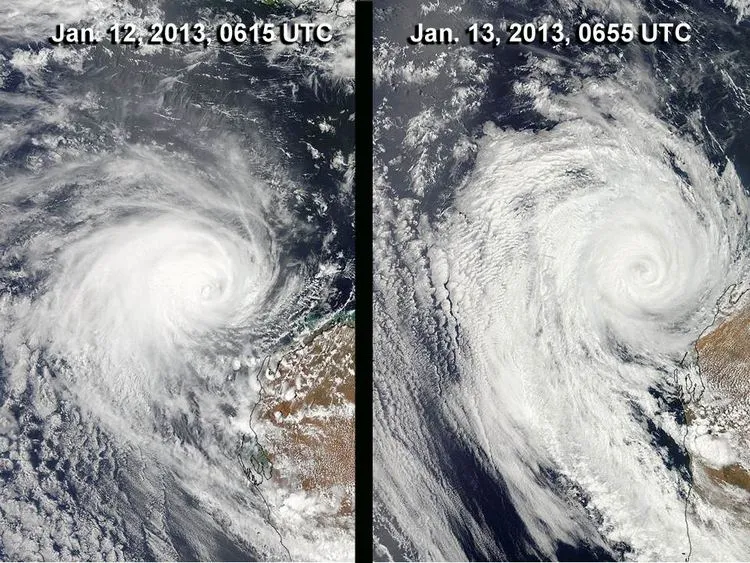
As Tropical Cyclone Narelle approached Western Australia, residents were unprepared for the dramatic transformation of their skies. On March 27, 2026, the cyclone began to unleash its fury, stirring up iron-rich dust from the Australian outback.
The sky above Shark Bay and Denham turned an eerie shade of crimson, creating a surreal daylight experience. AccuWeather noted, “NO, that’s not a filter! The sky turned an eerie shade of red in Western Australia as dust filled the air ahead of Tropical Cyclone Narelle.” This striking visual quickly spread online, igniting discussions about the unusual phenomenon.
As the cyclone intensified, winds exceeded 125 kilometres per hour, wreaking havoc across the region. Visibility in the Gascoyne area dropped to near zero, with residents reporting that daylight was erased within minutes. The air became thick with dust, significantly reducing air quality.
Tropical Cyclone Narelle is notable for being only the third storm in recorded history to make landfall on three separate Australian coastlines. The dust storm was particularly intense, with high levels of iron oxide reflecting red light and contributing to the bizarre atmospheric conditions.
Residents faced a challenging environment as the cyclone’s destructive winds and dust storms combined to create hazardous conditions. Reports indicated that the air quality deteriorated rapidly, leaving many struggling to breathe.
Details remain unconfirmed about the full extent of the damage caused by Narelle, but the immediate impact on visibility and air quality has been profound. The cyclone’s effects are a stark reminder of nature’s power and unpredictability.
As the storm continues to move through the region, the aftermath will likely reveal more about its impact on communities and the environment. For now, the striking red sky serves as a vivid reminder of the cyclone’s presence.