







How it unfolded
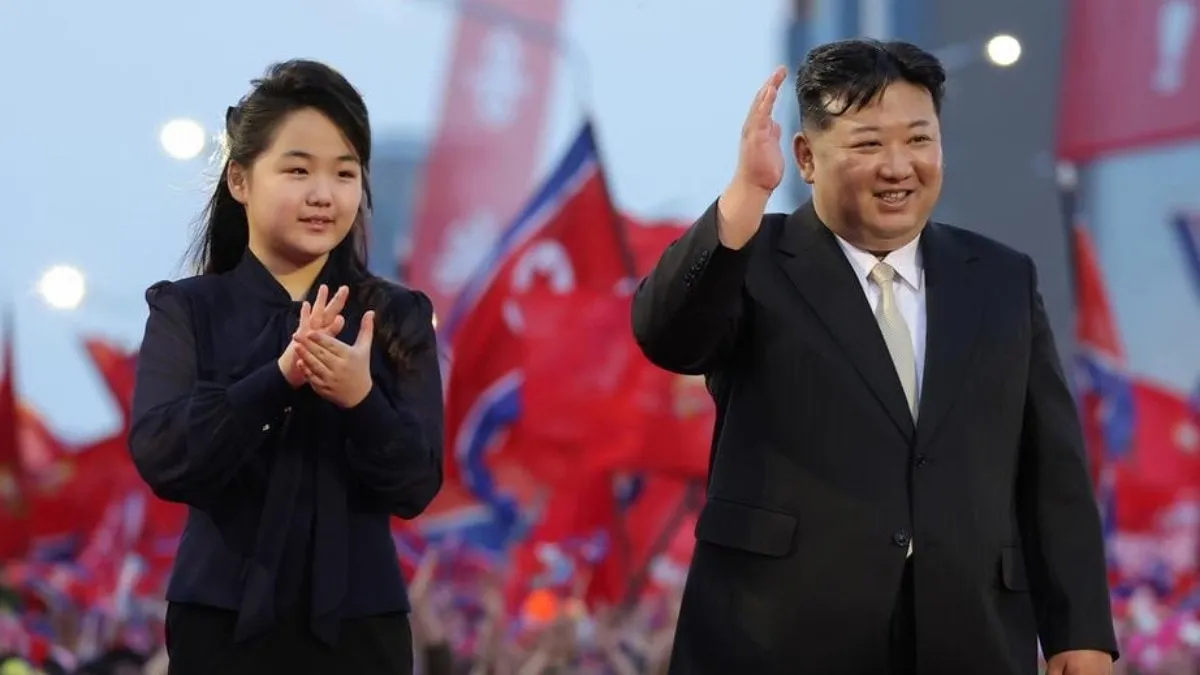
On March 15, 2026, North Korea held its parliamentary elections, a tightly controlled process dominated by the ruling Workers’ Party of Korea. As the world watched, Kim Jong Un, who has led the country since 2011, faced the electorate in a highly orchestrated political event.
The results were announced swiftly, revealing that Kim Jong Un scored an astonishing 99.93% of the votes. Voter turnout was reported at an impressive 99.99%, showcasing the regime’s emphasis on participation, albeit under strict conditions. However, for the first time since 1957, a small fraction of voters—0.07%—rejected the official candidates, marking a significant moment in North Korean electoral history.
Despite the overwhelming support for Kim, the election was not without its peculiarities. The Supreme People’s Assembly, which consists of 687 representatives, operates under a system where candidates are pre-selected by the ruling party, leaving voters with little choice. This binary choice has long been a hallmark of North Korean elections, which are often criticized for lacking genuine democratic processes.
Interestingly, only 0.0037% of registered voters were unable to cast their ballots due to being abroad or at sea, while an almost negligible 0.00003% abstained from voting altogether. These figures reflect the regime’s tight grip on the electoral process and the limited options available to the electorate.
The acknowledgment of dissenting votes, albeit minimal, raises questions about the political landscape in North Korea. It suggests that even within the confines of a controlled environment, there may be cracks in the façade of absolute loyalty to Kim Jong Un.
As the dust settles on the election, the implications of these results are significant. They highlight the regime’s ongoing efforts to project an image of stability and unity, even as the acknowledgment of dissent hints at underlying tensions. The international community will be closely monitoring how these developments affect North Korea’s internal dynamics and its relations with the outside world.
In summary, the 2026 North Korea elections have underscored the complexities of a regime that continues to navigate the delicate balance between control and the emergence of dissent. The world watches as Kim Jong Un consolidates power amidst a backdrop of unprecedented electoral acknowledgment.